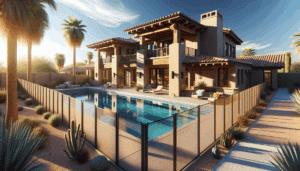
Living in Mesa means surviving the summer heat, and honestly, a backyard swimming pool is pretty much a survival tool around here. But before you let the kids jump in with their favorite floaties, making sure your backyard oasis is actually safe—and legal—is something every homeowner has to figure out. Let’s talk about what it takes to protect your family while keeping the city inspectors happy.
Contents
- 1 Why Arizona is so Strict About the Water
- 2 The Nuts and Bolts of Mesa Pool Fence Regulations
- 3 Comparing Fence Materials for Your Desert Oasis
- 4 Don’t Forget About the House Itself
- 5 Entertaining Friends? The Distraction Factor
- 6 What Happens If You Ignore the Rules?
- 7 Maintenance is Just as Important as Installation
- 8 Securing Your Yard with Confidence
Why Arizona is so Strict About the Water
Let’s be real, the Arizona sun is brutal, and we spend half the year practically living in our swimming pools. You know what? Because we have swimming weather for so many months out of the year, the state and the city of Mesa don’t mess around when it comes to water safety. They are incredibly strict, and for a very good reason.
It’s a tragic reality, but accidental drownings are a major issue in the desert. That’s exactly why local regulators put their foot down so hard on residential building codes. Here’s the thing: complying with these rules isn’t just about ticking off a box for the city inspector so you can avoid a fine. It’s genuinely about keeping your family, your neighbors’ kids, and even your pets completely safe from harm.
Speaking of pets, I knew a guy over near Dobson Ranch whose Golden Retriever used to sneak into the pool during monsoon season to chase floating palo verde branches. Funny? Kind of. Safe? Not without a proper barrier. It just goes to show that water safety isn’t just for toddlers. Dogs, cats, and even local wildlife can easily find themselves in trouble if your water isn’t properly secured.
The Nuts and Bolts of Mesa Pool Fence Regulations
You might be wondering if you can just throw up a cheap chain-link fence and call it a day. Honestly, no, you really can’t. The Mesa pool fence regulations are extremely specific, and they apply to almost every single residential pool in the area.
Let me explain. The rules are designed specifically to stop a curious child from wandering into the water unsupervised. If your barrier doesn’t meet the standard, you’re looking at potential citations or a massive headache when you try to sell your property.
Here is a quick breakdown of what you need to know:
- Height requirements are strict: Your fence needs to be at least 60 inches (5 feet) tall on the outside.
- Ground clearance matters: The gap between the bottom of the fence and the ground cannot be more than 2 inches. We can’t have anyone squeezing underneath!
- Gates must do the work for you: Every gate opening to the pool area must be self-closing and self-latching.
- Latch placement is key: The release mechanism for the latch has to be at least 54 inches from the ground. Keep it completely out of reach of little hands.
- No handholds allowed: The exterior of the fence cannot have any features, bumps, or decorative pieces that a child could use to climb over.
It sounds like a lot of measuring, I know. But getting these details right is absolutely crucial for your peace of mind. Plus, the building code officers in Mesa know exactly what to look for, so trying to cheat the measurements just won’t work out for anyone.
Comparing Fence Materials for Your Desert Oasis
So, you have to build a fence around the water. You might think a tall fence will ruin your landscaping. And sure, a badly designed one definitely will. But the right materials actually blend right in without destroying the vibe of your backyard.
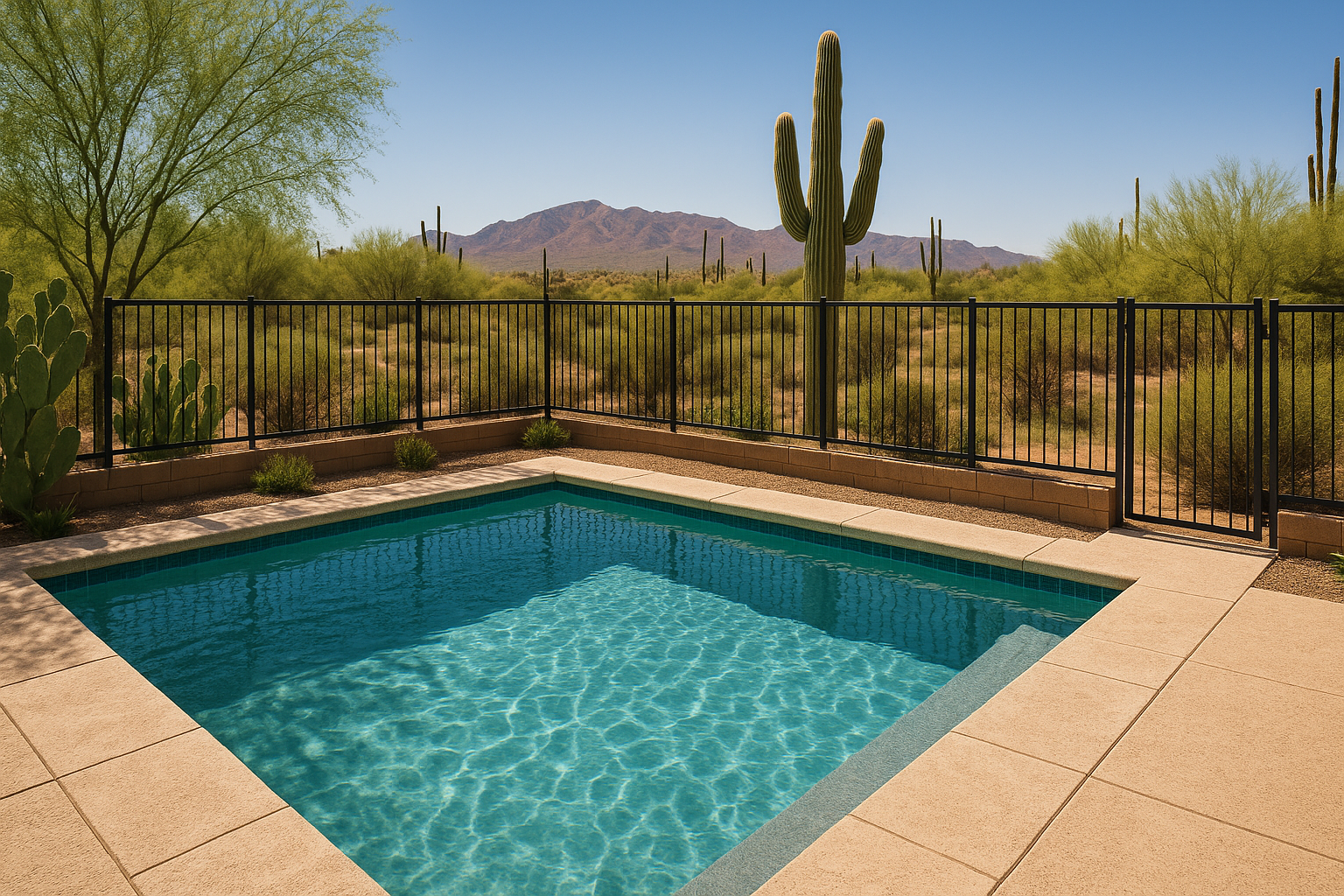
Wrought iron is a classic choice in Maricopa County, but a lot of homeowners are leaning toward modern mesh fences lately. Why? Well, mesh is incredibly tough, it doesn’t block your view of the water, and it doesn’t get ridiculously hot to the touch in the middle of July.
Let’s look at how the common options stack up for Arizona backyards.
| Material Type | Maintenance Level | Visibility & Aesthetics |
|---|---|---|
| Mesh Pool Fencing | Very Low | Excellent; practically transparent |
| Wrought Iron Fences | Moderate (needs painting) | Good, but thick bars obstruct the view |
| Glass Barrier Panels | High (lots of wiping) | Pristine, but traps a ton of heat |
Choosing the right material really comes down to your lifestyle. If you have active kids kicking soccer balls around, glass might be a disaster waiting to happen. Mesh is usually the safest, most forgiving bet for families. It is notoriously difficult for kids to climb because there is simply nothing for their little toes to grab onto.
Don’t Forget About the House Itself
You know, people get so focused on the actual fence out in the yard that they completely forget about the house itself. If your back patio door leads directly to the pool area, the house is acting as part of your barrier.
That means any doors or windows with direct access to the water need to be secured, too. Usually, this means installing specialized alarms on the doors.
These alarms aren’t quiet, either. They emit a loud, piercing shriek the second the door opens. It’s annoying when you’re just trying to take the trash out, sure. But that annoyance is totally worth it when it alerts you that a toddler has figured out how to slide the glass door open.
Some folks choose to install a secondary interior fence between the patio and the pool just so they don’t have to listen to the alarms every time they step outside. It’s totally up to you, but you have to secure that access point one way or another.
Entertaining Friends? The Distraction Factor
Let’s talk about those weekend barbecues. Mesa is famous for its gorgeous spring evenings and summer pool parties. You invite the neighbors over, throw some burgers on the grill, and suddenly there are twenty people hanging out in your backyard.
You might think having that many adults around makes the water safer. Paradoxically, it actually makes it more dangerous. When everyone assumes someone else is watching the water, no one is actually watching the water.
That is precisely why an automatic, self-latching pool safety fence is your best friend during a party. It stands guard when you are busy flipping burgers or grabbing another drink from the cooler. It doesn’t get distracted by a funny story or a text message. It just does its job, keeping the little ones separated from the deep end until an adult is ready to actively supervise them.
What Happens If You Ignore the Rules?
Look, I get it. Home improvement projects are expensive, and sometimes you just want to cut corners to save a few bucks. But skimping on your residential pool safety barrier is a terrible idea on multiple levels.
First off, if you get caught violating city code, the fines are undeniably steep. But honestly, the financial hit from the city is the absolute least of your worries.
Have you thought about your homeowner’s insurance? Insurance companies are notoriously strict about this stuff. If someone gets hurt and your fence isn’t completely up to code, your policy might deny your claim entirely. That could literally bankrupt a family. You don’t want to mess around with liability when water is involved.
And then there’s the real estate angle. When it’s time to sell your Mesa home, the buyer’s inspector will thoroughly check the pool area. If your gate doesn’t latch by itself, or if the fence is two inches too short, the buyer can demand you fix it before closing. You’ll end up paying for it eventually, so you might as well do it right the first time and enjoy the safety benefits while you still live there.
Maintenance is Just as Important as Installation
Here is something that doesn’t get talked about enough. Putting the fence up is only half the battle. You have to actually maintain the thing! The harsh desert climate is tough on everything, and your pool safety equipment is no exception.
Those self-closing gate hinges? They get dusty and stiff. The latches? They can shift out of place as the ground settles.
You really should be walking the perimeter of your swimming pool fence at least a few times a season. Check the tension on the mesh. Make sure the gate swings shut entirely on its own from any angle. Give the latch a good shake to ensure it holds firm. It takes five minutes, but it ensures your barrier is actually doing its job day in and day out.
Securing Your Yard with Confidence
Navigating the maze of city ordinances and safety codes can feel incredibly overwhelming. You just want to relax on a floatie with a cold drink, not memorize building regulations.
That’s where we come in. At Pool Safety Fencing, we know the local codes inside and out. We’ve helped countless neighbors across Mesa secure their yards without ruining the look of their landscaping. Whether you need a brand-new removable fence installed or you’re just looking for some guidance on your current setup, we are here for you.
Don’t wait until the summer heat is in full swing to worry about your family’s safety. Reach out to our local team today by phone # 480-771-8026 or Request A Free Quote on our website to get your backyard fully secured. We are ready to help you create a beautiful, worry-free oasis for your entire family!