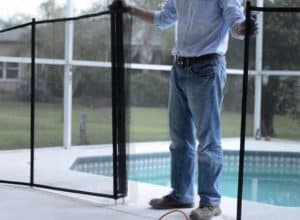
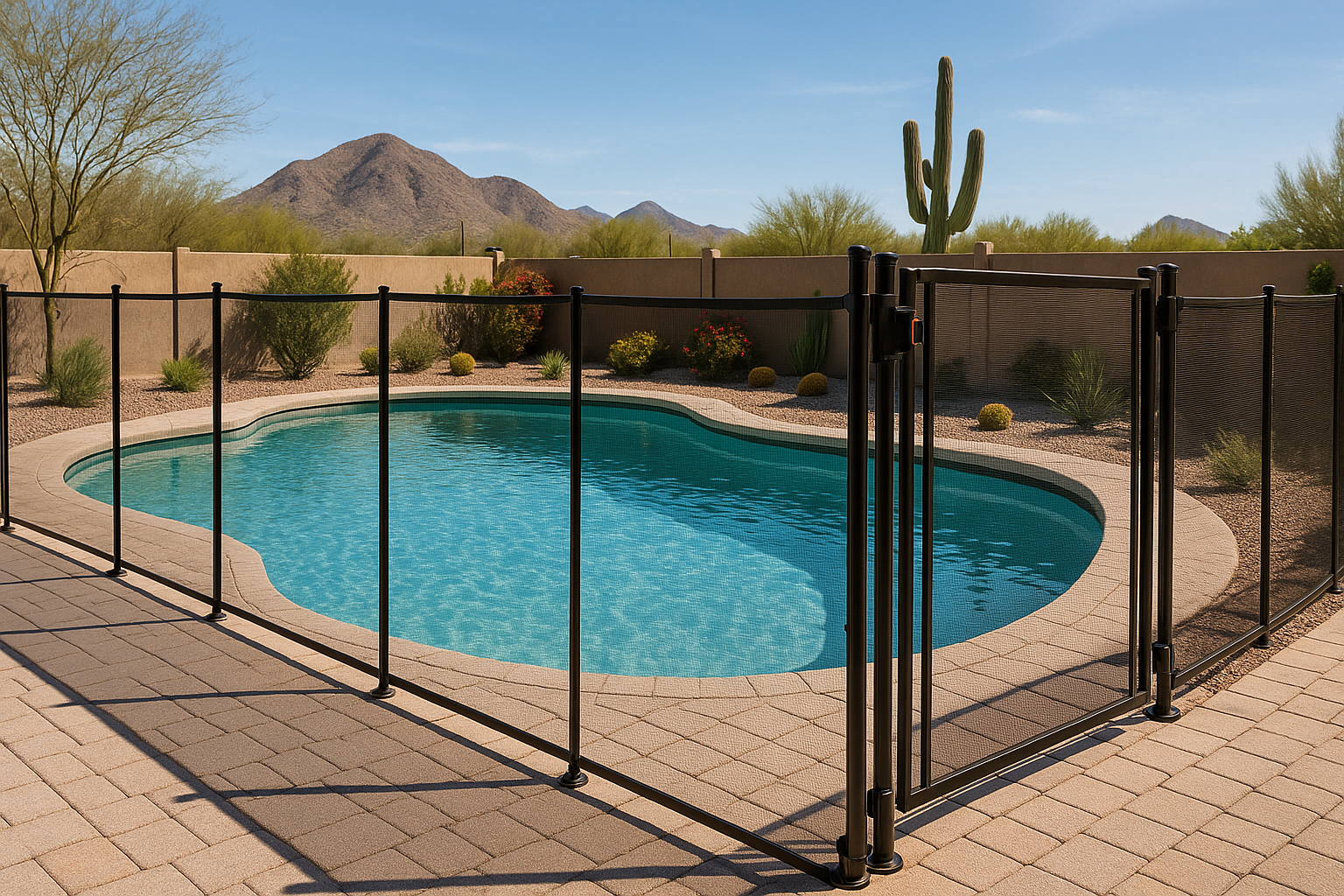
Let’s be real for a second: living in Mesa means your swimming pool is practically a member of the family. But enjoying that crystal-clear water comes with a heavy responsibility, specifically regarding the barrier that keeps our little ones safe. It’s easy to assume that once a fence is up, the job is done, but that’s a dangerous assumption to make.
Contents
- 1 Wait, I Have to Maintain It?
- 2 The Mesa Sun vs. Your Equipment
- 3 The “Shake and Look” Routine
- 4 The Gate: Your First Line of Defense
- 5 Keeping It Clean (It’s Not Just Cosmetic)
- 6 The Hidden Hazard: The Deck Holes
- 7 Troubleshooting Common Issues
- 8 A Note on “Removable” Fences
- 9 When to Call the Pros
- 10 Keeping Safety First
Wait, I Have to Maintain It?
Honestly, I get it. You make the investment, the crew comes out, drills the holes, sets up the mesh, and you breathe a sigh of relief. You’ve ticked the “safety” box. But here’s the thing—nothing in Arizona is truly “set it and forget it.” Not your air conditioning unit (we all know the pain of that breaking down in July), not your car’s dashboard, and definitely not your pool safety fence.
Think of your pool fence like the brakes on your car. You don’t think about them much while you’re driving, but you need them to work perfectly the instant you need them. A pool fence is a silent sentry. It stands out there in the baking sun, day after day, waiting for the one moment a toddler slips out the back door unnoticed.
If that fence has a weak spot? Well, we don’t even want to go there. So, let’s talk about keeping that barrier as tough as the day it was installed.
The Mesa Sun vs. Your Equipment
We love the weather here (mostly), but the sun in the Valley is a bully. It’s relentless. Over time, UV rays can do a number on materials that aren’t constantly cared for. While high-quality mesh pool fencing is built to withstand serious heat, components can shift, settle, or dry out over the years.
Have you ever left a plastic garden hose out all summer? It gets brittle and cracks. While pool fences are made of much sterner stuff—usually marine-grade mesh and aluminum—the earth they stand on moves. The ground in Mesa can expand and contract with the monsoons and dry spells. This shifting ground can cause your fence poles to lean slightly.
And you know what happens when poles lean? The tension drops. Tension is the secret sauce of a removable pool fence. It’s what keeps the mesh taut and difficult for a child to pull down or climb over. If the mesh gets saggy, it’s not just an eyesore; it’s a ladder.
The “Shake and Look” Routine
You don’t need to be a structural engineer to check your fence. You just need to be observant. I recommend doing a quick walk-around once a month. Maybe while you’re skimming leaves out of the pool or waiting for the grill to heat up.
Here is a simple checklist to run through:
- Check the Mesh: Look closely for tears, snags, or fraying. Do you have a dog? Sometimes Fido gets excited about a squirrel and scratches at the mesh. Even a small hole can become a finger-hold for a curious child.
- The Lean Test: Stand back and look at the poles. Are they standing straight like soldiers, or are they listing to the side like they’ve had a few too many at a backyard BBQ?
- The Sleeve Check: The plastic sleeves in your deck can crack over time. If the sleeve is broken, the pole wiggles. If the pole wiggles, the fence isn’t secure.
The Gate: Your First Line of Defense
If you take only one thing away from this article, let it be this: Check your gate latch.
The gate is the only part of the fence that moves regularly. It gets slammed, yanked, and swung on by kids (even though we tell them not to). Mechanical parts wear out. Most modern safety fences use magnetic latches—you might hear pros talk about the MagnaLatch—which are fantastic because they don’t rely on mechanical springs that can rust or jam.
But even magnetic latches can get misaligned.
Here is a quick test you should do right now. Seriously, go outside and do it. Open the gate fully and let it go. Does it swing shut and latch firmly with a satisfying click? Now, open it just a few inches and let go. Does it still latch?
If the gate swings but bounces off the latch, or if it stops just short of clicking shut, you have a problem. This often happens because the hinges have shifted or the gate pole has settled. Adjusting the hinges is usually a matter of a few turns with a screwdriver, but if you aren’t comfortable doing it, you need to call a professional. A self-closing gate that doesn’t self-close is just an open door.
Keeping It Clean (It’s Not Just Cosmetic)
Living in Mesa, we deal with dust. A lot of it. Especially after a haboob rolls through, your backyard probably looks like it was dusted with cocoa powder.
Cleaning your pool fence isn’t just about making it look nice; it’s about maintenance. Dust and grit can get into the mechanisms of your gate hinges and the lock. Over time, that grit acts like sandpaper, wearing down the internal components.
How to clean it without ruining it:
- Mild Soap: You don’t need heavy industrial chemicals. A little dish soap in a bucket of warm water is perfect.
- Soft Brush: Use a soft-bristle deck brush or a sponge. Scrub the mesh gently to remove bird droppings (which are acidic and can damage the coating) and dust.
- Rinse: Use a garden hose. Do not use a high-pressure power washer on the mesh. You could blast the coating right off the fibers or distort the weave, ruining the tension.
The Hidden Hazard: The Deck Holes
This is one specific thing that drives me crazy because nobody thinks about it until it’s too late. Since many of these fences are removable, you might take yours down for a party or during the cooler months when the kids aren’t swimming (though in Arizona, swim season is pretty long).
When you take the poles out, you have holes in your cool deck or pavers. Hopefully, you’re using the little plastic caps to cover them. But if you don’t, or if one goes missing, those holes fill up with dirt, rocks, and debris.
Why does this matter? Because when you go to put the fence back up, the pole won’t seat all the way down. If the pole is sticking up even half an inch higher than it should, the locking latch won’t engage properly, and the fence will be wobbly.
Pro Tip: If you notice a hole is clogged, don’t try to jam the pole in. You’ll crack the deck. Grab a shop vac or a narrow nozzle attachment and suck the debris out. If it’s really stuck, a little water from the hose might loosen the mud so you can vacuum it out.
Troubleshooting Common Issues
Sometimes it helps to see it laid out simply. Here’s a quick guide on what you might see and what it actually means for your safety.
| What You See | What It Means | Urgency Level |
|---|---|---|
| Faded Mesh | UV damage. Usually cosmetic, but check for brittleness. | Low (Monitor) |
| Gate Dragging | Hinges are sagging or the ground shifted. | High |
| Loose Pole | The deck sleeve is broken or the core hole is worn. | Medium |
| Torn Mesh | Structural integrity is compromised. | High |
| Hook & Eye Loose | The latch connecting sections is unscrewed. | Medium |
A Note on “Removable” Fences
The beauty of these fences is their flexibility. You can take them down when you’re hosting an adults-only dinner party. But let’s be honest about human nature—we get lazy.
I’ve seen plenty of homeowners take the fence down for a party on Saturday night, and on Tuesday morning, it’s still leaning against the side of the house. “I’ll get to it later,” we say.
But accidents happen in the “later.”
If you take the fence down, make it a rigid rule in your house: The fence goes back up before the guests leave. Or, at the very least, before you go to sleep that night. It’s a pain, sure. It’s dark, you’re tired, you just want to go to bed. But waking up knowing the backyard is secure is worth the ten minutes of effort.
When to Call the Pros
I’m all for DIY. If you can change your own oil or fix a leaky faucet, that’s awesome. But there is a line where DIY should stop, especially regarding child safety barriers.
If you notice that the concrete deck around the fence poles is cracking significantly, this is a structural issue. Re-drilling core holes into concrete isn’t something you want to guess at. If you drill at the wrong angle, the tension will never be right.
Also, if the mesh is torn, don’t try to patch it with duct tape or zip ties. I’ve seen it attempted, and it doesn’t work. The mesh relies on uniform tension to hold weight. A patch creates a weak point that will fail exactly when you need it to hold. In these cases, you usually need to replace that section of the panel.
Keeping Safety First
Look, nobody likes spending their Saturday morning inspecting latches and scrubbing mesh. It’s not glamorous work. But you know what? It’s the kind of work that lets you sleep at night. It allows you to let the kids play in the living room without that nagging panic in the back of your mind wondering if the back door is locked.
Your pool fence is a tool, and like any tool, it needs to be cared for to function. Living here in Mesa, we have the luxury of year-round outdoor living, but we have to respect the hazards that come with it. A well-maintained fence is more than just metal and fabric; it’s a promise you make to your family to keep them safe.
So, take a look outside. How’s your fence looking? If you noticed the gate isn’t self-latching properly, or the mesh has seen better days, don’t put it off. We can help get your barrier back to peak performance so you can focus on the fun stuff—like who’s firing up the grill.
If you are unsure about the condition of your current setup or need a professional eye to check for vulnerabilities, give us a call at by phone # 480-771-8026. Alternatively, you can visit our website to Request A Free Quote and ensure your pool remains a place of joy, not worry.