Living in Mesa means the pool is pretty much the center of the universe for a good chunk of the year, doesn’t it? But with the joy of backyard splashes comes that nagging, heavy responsibility of keeping everyone—kids, pets, and even neighbors—safe from accidents. Let’s walk through exactly how to check your safety barrier so you can relax knowing it’s actually doing its job.
Contents
Wait, Why Do I Need to Inspect It?
You might be thinking, “I put this fence up three years ago, surely it’s fine.” honestly, I wish that were true. But here’s the thing about living in the Valley: the environment is harsh. We aren’t just talking about a little bit of rain here and there. We are dealing with extreme UV exposure, intense heat, and those dusty monsoons that seem to coat everything in a layer of grime.
Your pool fence sits out in that weather 24/7. Materials expand in the heat and contract in the cold (well, what passes for cold here). Over time, screws loosen, mesh stretches, and plastic components can get brittle. It’s not just about aesthetics; it’s about pool safety. A fence that looks okay but falls over when a toddler leans on it isn’t really a fence, is it? It’s a false sense of security.
Plus, keeping up with maintenance saves you money. Catching a loose screw now is way cheaper than replacing a whole section of mesh later because it ripped in a windstorm.
The Gate: The Heart of the System
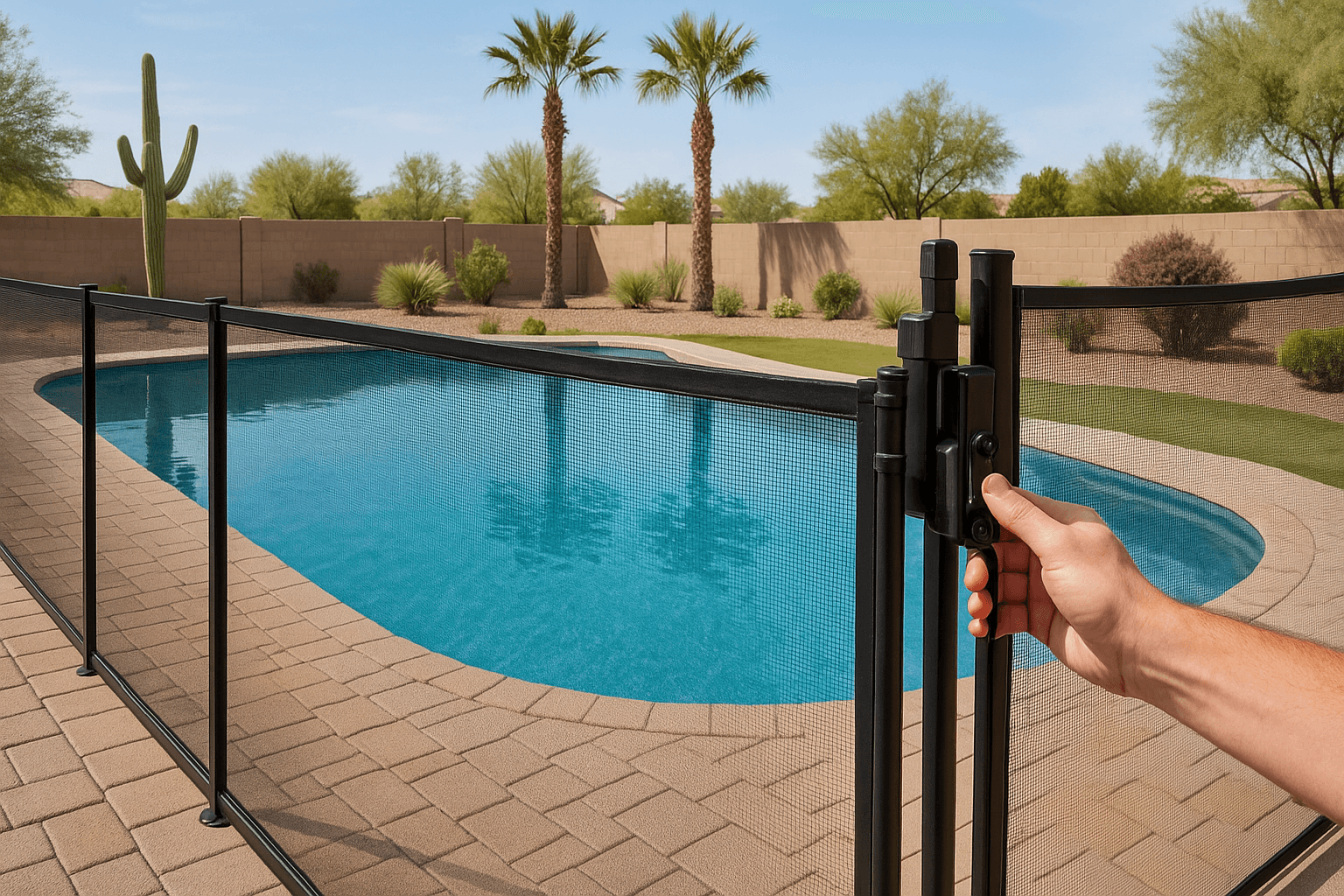
If you only check one thing today, make it the gate. This is the only moving part of the fence, which means it’s the part most likely to fail. A self-latching gate is the industry standard—and legally required in most parts of Arizona—but “self-latching” is a description of how it works, not a guarantee it will work forever.
Here is a simple test you should do:
- The Swing Test: Open the gate all the way and let it go. Does it swing shut and latch completely on its own? It should click firmly.
- The Inch Test: Open the gate just an inch or two and let go. This is where many gates fail. It needs enough spring tension to close from a barely-open position.
- The Shake Test: Once it’s latched, give it a tug. Can you wiggle it open without lifting the knob? If yes, you have a problem.
You know what often ruins a gate’s alignment? The ground shifting. The soil in Mesa can expand and contract, sometimes shifting the concrete deck just enough to misalign the latch. If the pin isn’t hitting the receiver dead-center, you might need to adjust the hinges.
Pro Tip: If the gate squeaks or feels sticky, don’t just grab the WD-40. Oil-based lubricants can actually attract dust and desert grit, which gums up the mechanism over time. Use a silicone-based lubricant or graphite instead. It keeps things moving without creating a mud paste inside your lock.
Checking the Mesh Tension
Most modern pool safety barriers use a mesh system. It’s great because it’s transparent enough to see through but strong enough to stop a child. However, mesh pool fencing relies entirely on tension to stay strong.
Walk along the perimeter of the fence. Place your hand on the top rail or the mesh itself and give it a firm push. Does it feel taut? It should have a bit of give, like a trampoline, but it shouldn’t feel saggy or loose.
If the mesh feels slack, a few things could be happening:
- The hook and eye latches connecting the sections might have come loose.
- The sleeves in the ground might have shifted.
- The molding on the poles could be slipping.
Loose mesh is dangerous because a child could potentially pull it down to climb over it, or push it up from the bottom to squeeze underneath. You want that mesh tight enough that nothing can squeeze under that bottom rail.
The Anchors and Sleeves (The Foundation)
Let’s look down for a second. Your removable pool fence is held in place by poles that slide into sleeves drilled into your cool deck or patio.
Because we live in a dusty area, those sleeves are magnets for dirt, rocks, and debris. If you ever take your fence down for a party or to clean the deck, take a look inside those holes. If they are packed with dirt, the poles won’t sit all the way down.
If a pole isn’t seated fully, the fence is higher off the ground than it should be. Suddenly, that 4-inch gap at the bottom becomes a 5 or 6-inch gap. That is plenty of room for a curious puppy or a small child to wiggle through.
How to clean them:
- Use a shop vac to suck out the debris.
- If it’s really caked in there, a high-pressure hose nozzle can blast it out (just make sure the water can drain).
Also, check the deck around the holes. See any cracks? Spiderweb cracks radiating from the sleeve could mean the concrete is failing. If the concrete crumbles, the fence loses its anchor.
Dealing with Sun Damage
The Arizona sun is relentless. It is basically a giant laser beam aimed at your backyard. While high-quality pool safety fencing is treated with UV inhibitors, nothing lasts forever against the Mesa sun.
Inspect the material itself. Run your hand lightly over the mesh.
- Is it flaking?
- Does it feel chalky?
- Do you see fiber blooming (little fuzzy hairs sticking out)?
If the mesh is fading, that’s usually just cosmetic. But if the fibers are breaking or the material feels brittle and crunchy, the structural integrity is compromised. A brittle fence might shatter or rip upon impact. If you spot rips or tears, don’t try to patch them with duct tape. I’ve seen it tried, and it doesn’t work. The tension of the fence will just pull the tape apart. You usually need to replace that section.
Troubleshooting Common Issues
Sometimes it helps to have a quick reference guide. Here is a breakdown of what you might see and what it actually means for your weekend.
| Symptom | Potential Cause | Urgency Level | What to Do |
|---|---|---|---|
| Gate won’t latch | Misaligned hinges or debris in latch | High | Adjust hinge tension; clean latch mechanism. |
| Saggy Mesh | Loose connection hooks | Medium | Tighten turnbuckles or check pole seating. |
| Green mold on bottom | Water accumulation/Sprinklers | Low | Scrub with mild soap and water. |
| Cracked Pole | Impact damage or wind stress | High | Replace the pole immediately. |
| Faded Color | UV Exposure | Low | Cosmetic only, unless fabric is brittle. |
Cleaning Your Fence (Without Ruining It)
You might be tempted to hook up the pressure washer and blast the dust off the fence. Please, hold your horses.
High-pressure water can actually damage the mesh coating or force water into places it shouldn’t go (like inside the poles, causing rust).
The best way to clean your pool fence is pretty low-tech:
- Mix some mild dish soap with warm water in a bucket.
- Use a soft-bristle brush (like a car wash brush) to scrub the mesh gently.
- Rinse it off with a regular garden hose.
Doing this a few times a year keeps the mesh looking transparent. When the mesh gets clogged with dust and hard water deposits, it starts to look solid, which blocks your view of the pool. And seeing the water is a huge part of active supervision.
When to Call in the Pros
Look, I’m all for DIY. Changing a lightbulb or tightening a screw is one thing. But when it comes to life safety devices, you have to know your limits.
If you find that the concrete deck is cracking significantly around the poles, that is not a quick fix. That requires core drilling and new installation. If the gate mechanism is physically broken, or if the mesh has large tears, you need professional replacement parts.
Also, if you just moved into a new house in Mesa and the fence was already there, it’s worth having a professional safety inspection. You don’t know how old it is or if the previous owner installed it correctly. A second set of eyes can spot things you might miss, like non-compliant gaps or recalled latch models.
Keeping It Safe
At the end of the day, your pool fence is a tool. And like any tool, it needs to be sharp and ready to work. It’s easy to become “fence blind”—you walk past it every day, so you stop noticing the little issues. But taking twenty minutes on a Saturday morning to wiggle the poles, check the gate, and wash off the dust can make the difference between a secure barrier and a dangerous illusion.
You want to enjoy your pool, not worry about it. A well-maintained fence gives you that freedom.
If you are checking your fence and something just doesn’t look right, or if the Arizona sun has finally won the battle against your mesh, don’t guess—get help. We can help you assess the damage and get your backyard safe again. You can reach us directly by phone # 480-771-8026 to discuss repairs or upgrades. Alternatively, you can Request A Free Quote online and we’ll come out to take a look.