
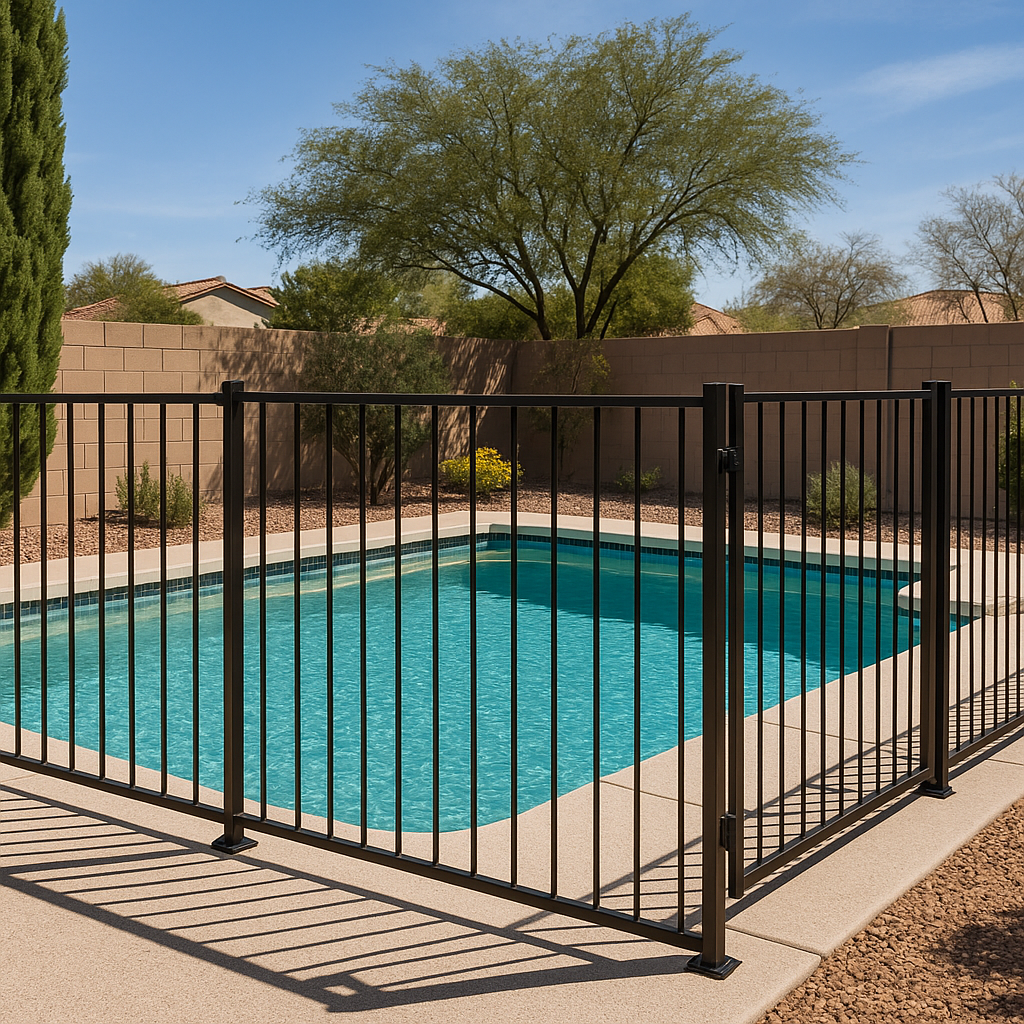
Living in Mesa means two things are pretty much guaranteed: you are going to deal with intense heat, and you are probably going to want a swimming pool to survive it. But owning a pool isn’t just about cannonballs and barbecues; it comes with a serious responsibility to keep the little ones safe.
Contents
- 1 Getting Your Head in the Game
- 2 The “Mesa Factor”: dealing with our dirt
- 3 Gathering Your Arsenal
- 4 Step 1: The Layout (Measure Twice, Sweat Once)
- 5 Step 2: The Drilling Phase
- 6 Step 3: Sleeves and Poles
- 7 The Gate: The Heart of the System
- 8 Troubleshooting Common Headaches
- 9 Maintenance: It’s Not “Set and Forget”
- 10 When to Call in the Cavalry
Getting Your Head in the Game
Before we even pick up a tape measure, let’s be real for a second. Installing a pool safety fence isn’t exactly like hanging a picture frame. It takes precision, a bit of sweat, and the right mindset. You know what? It’s actually one of the most rewarding DIY projects you can take on because the payoff is peace of mind.
Here’s the thing about safety barriers in Arizona. The City of Mesa pool barrier regulations are strict for a reason. Drowning is swift and silent, and a physical barrier is your first line of defense. So, while we are going to walk through the mechanics of building this, keep in mind that this isn’t just about avoiding a fine from the city inspector. It is about making sure that your backyard remains a sanctuary, not a source of worry.
When you look at the options, you might see glass, wrought iron, or chain link. But for most homeowners here, removable mesh pool fencing is the standard. It’s durable enough to withstand our brutal UV rays but flexible enough to take down when you’re hosting an adults-only pool party.
The “Mesa Factor”: dealing with our dirt
If you have lived in the Valley for more than a summer, you know our ground isn’t exactly soft potting soil. We are dealing with caliche. It’s that concrete-like layer of calcium carbonate found just under the topsoil, and honestly, it breaks shovels and spirits alike.
Why am I bringing this up now? Because installing a fence requires drilling. If you are planning to install a mesh fence system into your concrete pool deck, you are mostly in the clear. But if your fence line crosses into pavers or dirt, you need to be ready for a fight with the earth.
For standard installations into a concrete deck, the focus is on the concrete itself. You don’t want it cracking. The concrete around pools in Mesa expands and contracts with the temperature swings—blistering days and cooler desert nights. Your drilling needs to be clean to avoid chipping that could ruin the look of your deck.
Gathering Your Arsenal
You can’t do this with a standard cordless drill you use to assemble furniture. You need heavy hitters. Renting tools is usually the way to go unless you plan on drilling holes into concrete for a living.
Here is a quick breakdown of what you need to have on hand:
| Category | Item Needed | Why You Need It |
|---|---|---|
| Drilling | Rotary Hammer Drill | Standard drills will burn out. You need the impact action. |
| Bits | 5/8” or 1-inch Masonry Bit | Matches the sleeve size of your poles. |
| Alignment | Chalk Line & Template | Eyeballing it is a recipe for disaster. |
| Fixing | Hammer & Chisel | For cleaning out debris or minor adjustments. |
| Leveling | Bubble Level | To ensure your guide holes are perfectly straight. |
Step 1: The Layout (Measure Twice, Sweat Once)
This is the part where patience pays off. You need to map out exactly where the fence will go. Most people want the fence to follow the shape of the pool, usually about 24 to 30 inches away from the water’s edge. This gives you walking room inside the fence for cleaning the pool without having to take the fence down.
Snap your chalk lines. Mark your spots.
Here is a trick professional installers use: mark your gate location first. The gate is the most critical part of the system. It needs to be a self-closing, self-latching gate to meet safety standards. Once you know where the gate lives, you can space out the rest of the sections—usually in 3-foot or 1-meter intervals—working your way away from the gate.
Step 2: The Drilling Phase
Alright, put on your safety glasses. This is where it gets loud.
You aren’t just drilling straight down. Well, you are, but there is a nuance. The fence relies on tension to stay upright and taut. If you drill every hole perfectly 90-degrees vertical, the fence might sag.
The “Lean” Technique:
Many DIY instructions miss this. You often want a very slight lean away from the pool. When you insert the poles and latch the sections together, that tension pulls the poles upright. It’s a matter of degrees—literally—so use a drilling guide. Most DIY pool fence kits come with a drilling guide template. Use it. Do not guess.
If you hit a rebar while drilling through the concrete, stop. Don’t force it. You might need a specific rebar-cutting bit, or you might need to shift your hole slightly (though that messes up your spacing, so try to cut through if possible).
Step 3: Sleeves and Poles
Once the dust settles—and you should vacuum that dust out of the holes immediately—it’s time for the sleeves. These are plastic inserts that go into the holes to hold the fence poles. They protect the concrete and ensure a snug fit.
Tap them in gently with a mallet. If they are too tight, don’t smash them; re-drill the hole slightly to clear debris. If they are too loose, the fence will wobble, and that’s a safety hazard.
Now, start dropping your fence sections in. This is the moment of truth. If you measured right, the mesh panels should be tight. Like, drum-tight. You should have to pull hard to connect the latches between sections. That tension prevents a child from pushing the mesh down to climb over.
The Gate: The Heart of the System
We need to talk about the latch. In the industry, the MagnaLatch is sort of the gold standard. It’s magnetic and sits high up on the gate, out of reach of small hands.
Installing the gate requires the most precision. The trusses (the rigid sides of the gate) need to be perfectly plumb. If they aren’t, the self-closing hinges won’t work. Gravity is the engine here. If the gate leans, gravity pulls it open or keeps it from shutting.
Test this fifty times. Seriously. Open it an inch and let go. Does it latch? Open it all the way and let go. Does it latch? If it fails even once, adjust the hinges or the tension. A gate that doesn’t latch is just a decoration.
Troubleshooting Common Headaches
Let’s say you finished, but something looks off.
The Saggy Fence:
If the mesh looks loose, your holes might be tilted inward (towards the pool) or spaced too close together. Unfortunately, fixing a hole in concrete is harder than making one. You might need to move the hole over and patch the old one.
The “Impossible to Latch” Section:
If you have to summon the strength of a bodybuilder to connect two sections, your spacing is too wide. You might need to adjust the pole position on the mesh itself (some kits allow for this) or re-drill.
Cracked Decking:
It happens. Especially with older decks in Mesa that have been baking in the sun for decades. Use a high-quality concrete patch that matches your deck color. Don’t leave cracks open; water gets in, freezes (yes, it freezes here occasionally), and makes the crack bigger.
Maintenance: It’s Not “Set and Forget”
You might think once the fence is up, you are done. Not quite.
The Arizona sun is relentless. Over time, UV rays can degrade stitching, though high-quality textilene mesh holds up well. You should check the fence every season.
- Are the sleeves clear of dirt?
- Is the gate tension still strong?
- Are there any tears in the mesh?
Also, keep an eye on the spring-loaded safety latches. Dust—our famous haboob dust—can get inside the mechanisms and gum them up. A little blast of compressed air or a dry lubricant (not oil, which attracts more dust) keeps them snapping shut nicely.
When to Call in the Cavalry
Look, I am all for saving a buck and the satisfaction of building something with your own hands. But let’s be honest with each other. Drilling thirty holes into reinforced concrete in 105-degree heat isn’t everyone’s idea of a good weekend.
If you have a complex pool shape, multiple elevation changes (like steps or raised planters), or a paver deck that requires lifting stones and installing a concrete footer underneath, the difficulty level skyrockets. Paver installations are tricky because the pavers themselves don’t offer enough structural support for the tension of the fence. You have to pour concrete underneath them. That is a whole different ballgame.
There is no shame in admitting that you want it done fast and you want it done right without the backache.
Ensuring your family is safe around the water is the most important investment you can make for your home. Whether you decide to tackle the drilling yourself or prefer to have it professionally handled, the result is a safer environment for everyone. If you’re looking for a perfect installation without lifting a finger, give us a call at 480-771-8026 or Request A Free Quote online today.