Living in Mesa means your backyard pool is basically your summer sanctuary, but let’s be honest, it also brings a quiet undercurrent of worry if kids or pets are running around. A sturdy pool fence is your absolute best defense against accidents, yet so many of us forget that these barriers need a little TLC to keep doing their job right. Honestly, a quick weekend once-over can mean the difference between total peace of mind and a creeping sense of panic.
Contents
You Know What? Fences Need Love Too
We tend to think of fences as these permanent, invincible structures. They stand there, day after day, keeping our families safe. Fences are basically maintenance-free. Well, mostly maintenance-free. The truth is, that desert sun is completely unforgiving.
Here’s the thing. When you install a pool safety fence, you expect it to hold up. But materials respond to the environment. The intense UV rays we get here in the Valley bake everything they touch. Have you ever left a plastic toy out on the patio all July? It gets brittle, right? Your fence components are fighting that same battle.
While modern mesh pool fences are treated to resist sun damage, the hardware, the tension, and the structural posts still experience natural wear and tear. You cannot just set it and forget it. A loose fence isn’t a safe fence. It needs to be tight. Really tight. When tension drops, kids can pull up the bottom edge and squeeze underneath. That totally defeats the purpose of having a barrier in the first place.
Your Quick Weekend Walk-Through Guide
So, what exactly should you be looking for? You do not need a degree in engineering to figure this out. A simple, mindful walk around the perimeter of your pool once a month is usually enough to catch small problems before they turn into major safety hazards.
Let me explain what a good inspection actually looks like. Grab your morning coffee, head out to the patio, and just start at the gate.
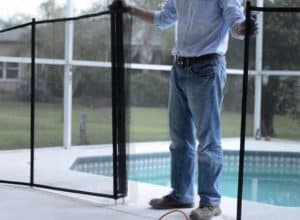
- Give the posts a good shake: Walk along the fence line and wiggle the poles. They should feel solid in the ground. If they wobble excessively, the sleeve in the concrete deck might be cracked, or the pole itself might be compromised.
- Eye the mesh for snags: Run your hand along the fabric. Look for tiny tears, frayed edges, or places where the mesh is pulling away from the structural piping. Pets love to scratch at these things.
- Check the tension: The mesh should feel like a drum. If it sags, the structural tension has loosened. Sometimes this happens after a heavy monsoon wind knocks things around.
- Inspect the ground anchors: Look at the holes drilled into your cool deck or pavers. Are they accumulating dirt and debris? Clean them out so the poles sit perfectly flush.
Actually, wait, let’s back up a second and talk specifically about your gate. This is arguably the most critical part of your entire Mesa pool fencing setup.
The Gate: Your First Line of Defense
If your gate fails, the whole system fails. It is really that simple. A pool gate is the only part of the fence that actually moves, which means it takes the most abuse over the years.
Most building codes require a self-closing pool gate with an automatic latch positioned high out of the reach of small children. But springs lose their bounce. Hinges get rusty. Latches get misaligned.
Open your gate completely and let it go. Does it swing shut smoothly? Does the latch click securely into place without you having to push it? Try opening it just an inch or two and letting go. It should still snap shut and lock. If the gate hesitates, or if you hear a grinding noise, it is time to adjust the tension on your auto-close hinges. Usually, you just need a flathead screwdriver to turn the tension cap and lock it into a tighter slot.
You also want to make sure the gap between the gate and the latch isn’t too wide. Ground shifting—which happens a lot in Arizona when the soil dries out—can actually pull the gate posts slightly apart. If the latch barely catches, a simple push from a determined toddler could pop it open.
How Mesa’s Climate Messes with Your Safety Barrier
Let’s take a quick detour and talk about the weather. Arizona weather does weird things to pool hardware. It just does. Between the dry heat, the sudden dust storms, and the hard water coming out of our hoses, your fence takes a beating.
I put together a quick breakdown of what you are actually fighting against out there in the yard.
| The Weather Threat | What It Does to Your Fence | The Quick Fix |
|---|---|---|
| Brutal UV Sunrays | Fades the mesh and degrades plastic caps over time. | Wash with mild soapy water to remove abrasive dirt; replace brittle caps. |
| Monsoon Winds | Loosens pole tension and blows heavy debris into the mesh. | Check tension after every storm; clear away branches immediately. |
| Hard Water Spray | Calcium buildup on latches and aluminum posts. | Wipe down hardware with a diluted vinegar solution to dissolve deposits. |
See? It is not just about the sun. The hard water from your sprinklers hitting the fence every morning can calcify the internal springs of your latch. A little white vinegar goes a long way to keep those mechanisms moving freely.
Keeping It Clean Without Ruining It
Speaking of cleaning, you would be surprised how many people accidentally ruin their pool fence maintenance routines by using the wrong chemicals. You might look at a dusty, water-spotted fence and think, “I’ll just blast this with the power washer and some bleach.” Please don’t do that.
High-pressure water can shred the fibers of a tensioned mesh screen. And bleach? It eats through the protective UV coating faster than you can blink.
Instead, just grab a bucket of warm water and a tiny bit of mild dish soap. Use a soft-bristled brush—like the kind you would use to wash your car—and gently scrub the mesh. Hose it off with a standard garden nozzle. It takes maybe twenty minutes, but it keeps the material flexible and looking brand new. Plus, keeping the dirt off stops it from acting like sandpaper against the fabric whenever the wind blows.
Let’s Talk About When It’s Time to Call It Quits
Now, you can fix most things yourself. A loose screw here, a squeaky hinge there. But there is a clear line between casual weekend maintenance and needing professional help.
If you notice that the actual poles are bending or snapping, that is a massive red flag. Aluminum poles have incredible tensile strength, but once they kink, they lose all structural integrity. You cannot just bend them back into shape and hope for the best.
Or maybe the mesh itself has dry-rotted. If you push your thumb against the fabric and it easily gives way or splits, the entire section needs to be replaced immediately. Patching it with tape or sewing it up is just a recipe for disaster. Kids are surprisingly strong, and a compromised section won’t stop a running child.
Honestly, if you are ever looking at your fence and feeling unsure, trust your gut. It is always better to have an expert take a look than to cross your fingers and hope the barrier holds up.
Keeping Your Backyard Fun and Safe
Maintaining your backyard safety isn’t glamorous work. Nobody wakes up on a Saturday excited to scrub calcium off a gate latch. But think about the alternative. Every little adjustment, every quick wash, and every tension check is another layer of protection for the people you care about most.
When your fence is tight, your gate snaps shut naturally, and your posts sit securely, you can actually relax. You can sit on the patio, sip that iced tea, and enjoy the beautiful Mesa weather without constantly scanning the water’s edge in a panic. That peace of mind? It is completely priceless.
If you’ve noticed your fence is looking a little tired, or if that gate just won’t close right no matter what you do, we are here to help you sort it out. Give the experts at Pool Safety Fencing a quick call by phone # 480-771-8026 to chat about your setup, or Request A Free Quote on our website so we can get your backyard perfectly secure.