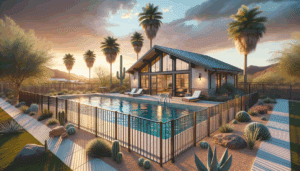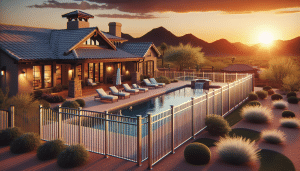
Living in Mesa means navigating heat that feels like opening an oven door, which makes having a pool less of a luxury and more of a survival strategy. But before you can fully relax with that iced tea while the kids splash around, there’s that nagging thought in the back of your mind about safety. Honestly, securing your backyard isn’t just about following rules; it’s about making sure your sanctuary doesn’t turn into a source of stress.
Contents
- 1 Let’s Talk About the “Why” (Beyond Just the Rules)
- 2 Material Matters: What Can Stand Up to the Mesa Sun?
- 3 The Gate: The Weakest Link (Usually)
- 4 Aesthetics: Does It Have to Look Ugly?
- 5 Versatility: Can You Take It Down?
- 6 The “DIY” Temptation vs. Professional Installation
- 7 Longevity and Warranty
- 8 A Note on “Layers of Protection”
- 9 Making the Final Call
Let’s Talk About the “Why” (Beyond Just the Rules)
You know what? Nobody wakes up on a Saturday morning excited to read through municipal safety codes. It’s dry, boring stuff. But here in Arizona, specifically Mesa, the rules are strictly enforced for a reason. Drowning is swift, silent, and frankly, terrifyingly common in our state.
So, while we have to adhere to the city’s requirement—usually a barrier at least 5 feet high with self-closing, self-latching gates—the real motivation is peace of mind. You want to be able to answer the front door or grab a snack without a sudden panic attack because you lost sight of the toddler for ten seconds.
Choosing a barrier system isn’t just buying a fence; it’s buying your own sanity.
Material Matters: What Can Stand Up to the Mesa Sun?
Here is the thing about our weather: it is relentless. The sun here doesn’t just make things hot; it destroys them. UV radiation in the Sonoran Desert eats cheap plastic and fades paint faster than you can say “monsoon season.” When you are looking at materials, you have to think about durability just as much as safety.
Mesh Fencing: The Popular Choice
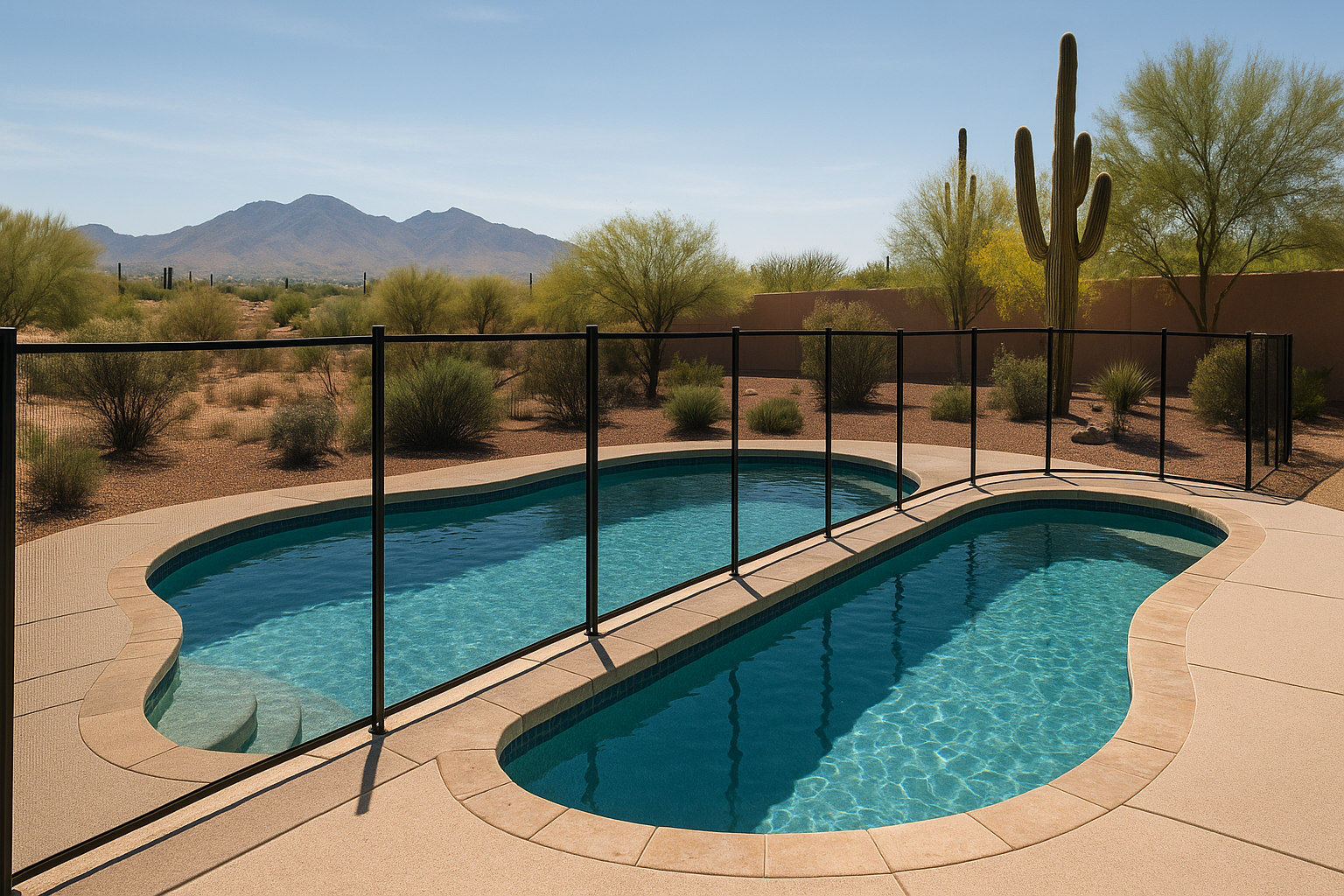
Most folks around here lean toward removable mesh pool fencing. Why? Because it works. It is strong, it is hard for kids to climb (no footholds), and it is somewhat transparent.
- The Transparency Factor: You might think you want an opaque fence for privacy, but for pool safety, you actually want to see through it. You need to see if someone is in the water.
- Airflow: Mesh allows the breeze to pass through. A solid wall can create a heat trap on the pool deck, and trust me, you don’t need any more heat back there.
Glass and Iron: The Alternatives
Glass looks incredible. It’s sleek, modern, and keeps the view of your landscaping wide open. But—and this is a big but—have you ever tried to keep glass clean in Mesa? Between the dust storms and our hard water, you might be signing yourself up for a part-time job just squeegeeing that fence.
Iron is the classic, sturdy option. It looks permanent and regal. However, metal gets hot. Like, “burn your hand” hot. Plus, unless the vertical bars are spaced perfectly, they can sometimes offer just enough leverage for an adventurous kid to shimmy up.
Here is a quick breakdown of how they compare:
| Material | The Good Stuff | The “Eh, Maybe Not” Stuff |
|---|---|---|
| Mesh Fencing | climbing-resistant, removable, UV stable | Not as “structural” looking as iron |
| Glass Panels | Unobstructed views, high-end look | Hard water spots, restricts airflow |
| Wrought Iron | Durable, classic aesthetic | Gets super hot, requires rust maintenance |
The Gate: The Weakest Link (Usually)
I cannot stress this enough: your fence is only as good as your gate. You can build a fortress around your pool, but if the gate doesn’t latch properly every single time, the whole system fails.
Kids are smarter than we give them credit for. They watch us. They see how we lift a latch or turn a handle. That is why MagnaLatch systems (or similar magnetic latches) are the industry standard. They are positioned high up, out of reach for little ones, and they rely on magnetism to snap shut.
A key consideration here is the self-closing hinge. Over time, springs can wear out, especially in the grit and dust of a Mesa summer. You need adjustable hinges that ensure the gate swings shut and latches on its own, whether it’s opened an inch or all the way. If you have to turn around and physically push it closed, it’s not a safety gate; it’s just a door.
Aesthetics: Does It Have to Look Ugly?
One of the biggest hesitations homeowners have is the fear of ruining their backyard vibe. You spent thousands on that travertine decking and the pebble-tec finish; you don’t want to surround it with something that looks like a construction zone.
I get it.
But modern pool safety fencing has come a long way. Let me tell you a little secret about color: Black mesh is actually more invisible than white or beige mesh.
It sounds contradictory, right? You’d think white would blend in with the bright Arizona sky. But the human eye has a hard time focusing on black mesh; it tends to look past it. White or lighter colors reflect sunlight, creating a glare that makes the fence stand out more. So, if you want the barrier to “disappear,” go darker.
Also, consider the poles. You can match the pole color to your trim or patio furniture. It’s a small detail, but it helps the barrier feel like part of the design rather than an afterthought.
Versatility: Can You Take It Down?
This is where the conversation usually turns to lifestyle. Are you throwing a generic backyard BBQ for adults only? Maybe you’re hosting a wedding reception?
If you go with wrought iron or glass, that fence is there forever. It is part of the real estate. Removable mesh fencing, on the other hand, gives you options.
Now, don’t get me wrong—taking it down isn’t something you’ll want to do every weekend. It takes a little elbow grease. But having the option to remove the fence for a specific event (assuming no children are present) is a huge plus for many Mesa homeowners.
However, a word of caution: if you take it down, you have to be vigilant. The moment that fence is down, your layer of protection is gone. Most people I talk to find they just leave it up year-round because, well, better safe than sorry.
The “DIY” Temptation vs. Professional Installation
We are all a little handy, right? We’ve watched the videos. We own a drill. But installing a pool barrier system involves drilling precise holes into concrete or cool deck.
Here is the kicker: the holes have to be drilled at a specific angle. The tension of the mesh relies on the poles leaning slightly away from each other. If you drill straight down, or if the angle is off by a fraction, the fence will be saggy. A saggy fence is easy to climb and looks terrible.
Plus, you run the risk of cracking your deck if you don’t use a diamond-tipped core drill. Cracking your cool deck is a mistake that is expensive to fix.
Professionals also know how to navigate the weird obstacles in your yard. Steps, planters, uneven pavers, drainage slopes—yards in Mesa are rarely perfectly flat rectangles. Routing a fence around a custom waterfall feature requires a level of geometry that goes beyond a standard Saturday afternoon project.
Longevity and Warranty
Since we already established that the sun is brutal, check the warranty on whatever system you select. You want a manufacturer that covers specifically against UV degradation.
Look for poles that are reinforced. Standard aluminum is good, but reinforced aluminum poles (often with an internal X-shape or tri-shape structure) are better. They can withstand the tension of the fence and the occasional monsoon wind gust without bending.
Also, ask about the screws. It seems minor, but if the screws in the deck aren’t stainless steel, they will rust. And rust stains on a nice patio are a pain to get out.
A Note on “Layers of Protection”
While we are focusing on fences, I should mention that safety experts always talk about “layers of protection.”
The fence is your first line of defense. But consider adding:
- Pool alarms: These sense when something hits the water.
- Door alarms: On the back door of your house leading to the patio.
- Swimming lessons: Get the kids comfortable and capable in the water as early as possible.
The fence buys you time. The other layers back it up. It’s like wearing a belt and suspenders—maybe a little overkill for fashion, but for safety, you can never be too secure.
Making the Final Call
Choosing the right barrier comes down to balancing your budget, your aesthetic taste, and the layout of your yard. But remember, the cost of the fence is a fraction of the cost of the pool—and it’s protecting something far more valuable than the water.
Take a walk around your pool. Look at the access points. Imagine where a curious toddler would try to go. That is your blueprint. Whether you choose the sleek look of glass or the practical safety of mesh, the best fence is the one that gets used.
If you are ready to secure your pool and want a system that handles the Mesa heat while keeping your family safe, we are here to help you figure it out. Give us a call at 480-771-8026 to chat about your options, or simply Request A Free Quote online to get the process started.